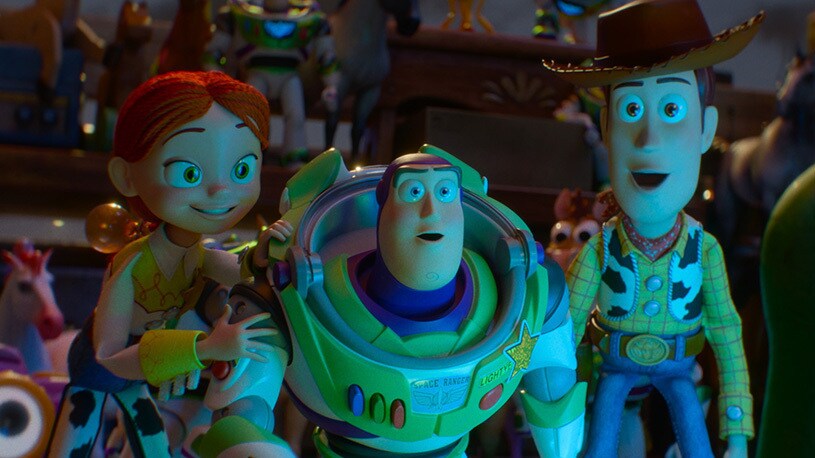
The fifth Toy Story arrives with an unusually modern problem. Bonnie has a tablet, the tablet has a personality, and the toys are suddenly competing with something that does not need imagination to keep a child occupied.
It is a premise that could have become a lecture. Instead, the film mostly keeps the argument inside character and comedy, which is exactly why it works.
Pixar still knows the toybox .
The animation is as expressive as ever, especially when the film puts the toys into situations where their physical limitations become the joke. A tiny plastic figure can still create a surprisingly large emotional problem.
Toy Story works when the toys feel small and the feelings feel enormous.
Jessie gets especially strong material, and the story understands that the franchise's emotional center has expanded beyond Woody without abandoning him.
The message is familiar .
The film's argument about screens and attention is not exactly new. WALL-E made it decades ago. Other Pixar films have made versions of it too.
What saves it is the warmth. Toy Story 5 is less interested in proving technology evil than in asking what gets lost when convenience replaces participation.
Not the old magic. A new version of it .
There are moments when the fifth film feels like a sequel because, well, it is. But there are also stretches where the characters feel newly curious again.
That is enough. It may not touch the first three films, but it does not embarrass them either. It simply keeps the toys moving.