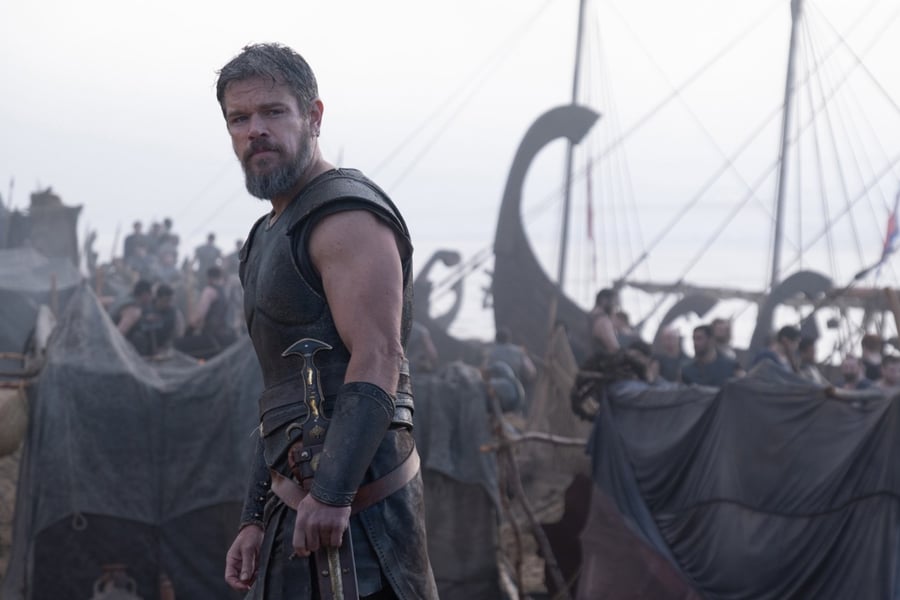
The story is ancient, but Nolan's approach is surprisingly direct. Odysseus wants to go home. Everything else — monsters, gods, temptation, war, pride — gets between him and that simple desire.
Matt Damon plays him less as a flawless hero than as a man whose intelligence is both his greatest weapon and one of the reasons the journey keeps getting harder. The film's scale works because the emotional objective remains so clear.
The spectacle has a reason .
Nolan has always been good at making size feel consequential. Here, the scale is not just decoration. Ships feel tiny. Landscapes feel indifferent. When a mythological threat appears, it does not arrive as a digital interruption; it feels like the world itself has changed shape.
The sea is not scenery here. It is the film's most patient antagonist.
The ensemble is enormous, but the movie rarely loses track of its central relationship: Odysseus and the home he cannot stop imagining.
Patience becomes part of the adventure .
There are long passages where very little happens in the conventional sense. That may frustrate viewers expecting a constant escalation, but the stillness is part of the design. A journey this old should feel like it takes time.
When the film finally accelerates, the contrast makes the action hit harder. The quiet earns the noise.
A theatrical argument .
The Odyssey is one of those films that makes the room around you part of the experience. The image wants scale, the sound wants space, and the story benefits from an audience willing to sit with it.
Nolan's greatest achievement is not making Homer bigger. It is making the old story feel alive enough that you forget how many times humanity has already told it.