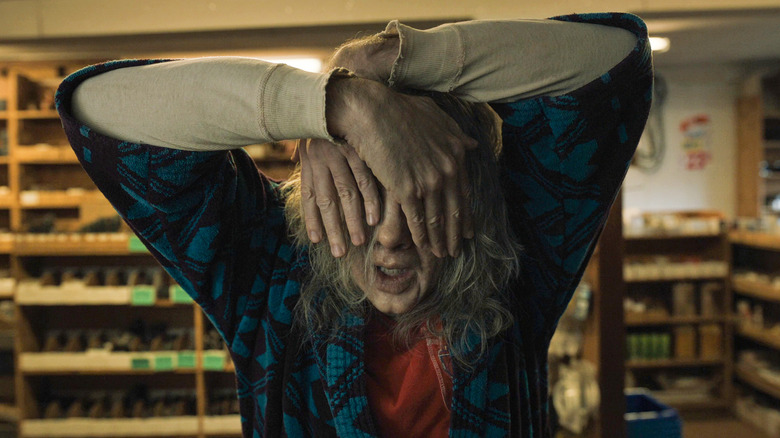
Longlegs knows that dread grows in the gaps. Osgood Perkins keeps the frame cold, the information incomplete and the performances just slightly off-center, creating a mystery that feels like it has already been waiting for you.
Cold rooms, warm blood.
The movie's visual language is deliberately restrained. Hallways, offices and houses become threatening because Perkins refuses to decorate them with the usual horror punctuation.
Monroe's stillness.
Maika Monroe plays Lee as someone who notices details before she knows what they mean. That makes her investigation feel internal as well as procedural.
The scariest thing is the pattern.
Cage as disturbance.
Nicolas Cage barely needs to appear to make Longlegs feel unstable. When he does, the performance is grotesque without becoming a simple caricature.
The answer is not relief.
Longlegs becomes less frightening once the mystery is fully explained, but the explanation also gives the film a lingering sadness. The evil here is frightening because it has been allowed to become routine.
It is less a jump-scare machine than a film about the fear of understanding too late.
The restraint is important. Perkins does not need every room to contain a scare, so the ordinary spaces begin to feel suspicious instead. A hallway, a desk or a quiet conversation can carry the same pressure as a revelation because the film has taught you that the frame may be withholding something.