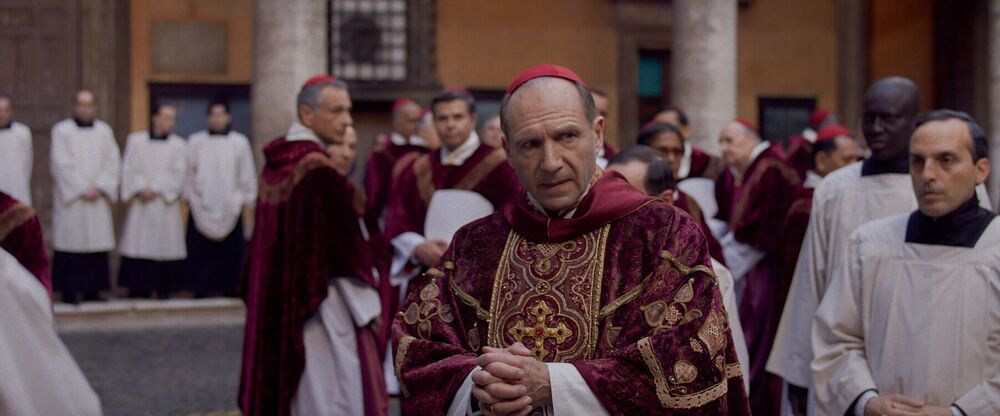
Conclave turns a closed-door election into a pressure cooker. Edward Berger knows that the most effective suspense is often not about what happens next, but about what everyone in the room already knows and refuses to say.
The room is the action scene.
Berger makes corridors, voting papers and half-finished conversations feel dangerous. The production design is controlled without becoming sterile, giving every doorway the possibility of another negotiation.
Fiennes carries the uncertainty.
Ralph Fiennes plays Lawrence as a man who wants the institution to be better than the people inside it. His restraint gives the film somewhere to breathe between revelations.
The silence is doing the campaigning.
A mystery that trusts its audience.
Conclave gives you enough information to build theories without constantly nudging you toward the correct one. That confidence is refreshing. The film understands that suspicion is more interesting when it belongs to the viewer.
The final turn.
The ending is bold enough to divide people, but it fits the film's larger argument: institutions are shaped not only by their rules, but by the private lives people bring into them.
It is a film about power that understands power rarely needs to raise its voice.