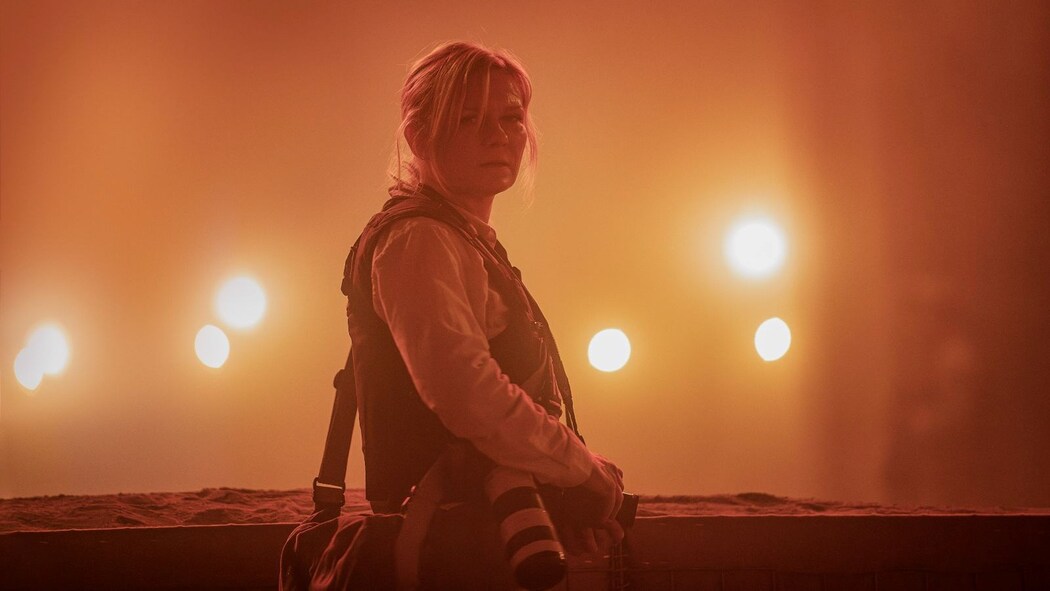
Civil War is less interested in predicting a political future than in showing what happens when violence becomes ordinary enough to photograph. Alex Garland makes the camera both shield and witness, and the film never lets that contradiction disappear.
A country without an explanation.
Garland deliberately leaves the political map incomplete. That can frustrate viewers looking for a thesis, but it also shifts attention toward the physical experience of moving through a collapsing country.
The press corps.
Kirsten Dunst gives Lee a tired professionalism that says more than a speech could. She knows how to make a photograph, but the film keeps asking what making the photograph costs.
A photograph can be a way of looking away.
Sound and distance.
The movie's violence is often frightening because of how matter-of-factly it arrives. The camera can be close enough to see a face and still feel emotionally far away.
The final image.
Civil War ends with the photographers still working. That is not a comforting ending, but it is a precise one. The frame survives even when the context does not.
Its most unsettling moments are not the loudest ones. They are the moments when the characters stop being surprised.